
Okay, so check this out—I’ve been poking around Solana explorers for years. Wow! The landscape keeps shifting. At first glance, it all looks sleek and fast; then you notice the gaps. My instinct said “this is solid,” but then I dug deeper and found nuances that matter for traders, devs, and collectors alike.
Here’s the thing. Solana’s throughput makes on-chain analytics exciting in a way Ethereum didn’t in the early days. Seriously? Yes. Low fees and high TPS mean you can observe micro-patterns in real time that used to be invisible. But that also means you need tools that can handle the flood without smoothing out the important spikes—transactions that happen in milliseconds, mempool-less behavior that still has patterns.
When I compare token trackers, my gut reaction is quick: design matters, but data accuracy matters more. Hmm… some explorers prioritize shiny UI and forget the basics. Initially I thought that a pretty dashboard would be enough, but then I realized that missing metadata or lagging updates can cost you a trade or a bid on a hot drop. Actually, wait—let me rephrase that: a slow or inaccurate tracker costs you information edges that on Solana, matter a lot.
For NFTs, the stakes are personal. You care about provenance, royalties, floor changes, and wallet history. Short-term flips happen lightning-fast. Really? Yes, rapid listings and sweeps can move floors by double digits in minutes. So if your tracker shows stale floor prices because it aggregates slowly, you’re chasing yesterday’s market. Here’s another truth: not all “verified” collections are curated the same way across explorers, so cross-checking is very very important.
How I choose an explorer for Solana analytics
Practical checklist first. Wow! You want three things: accuracy, timeliness, and useful context. Not in that order every time—sometimes timeliness trumps context for sniping. Medium-term trades prefer context and historical curves, though actually both matter. My preference leans toward explorers that let you slice data programmatically (CSV, API), because I often combine on-chain reads with off-chain signals.
Okay, here’s a detail that bugs me: APIs that throttle without clear tiers. Hmm… I’m biased, but if you’re building a bot or an aggregator, unpredictable rate limits break workflows. Also, look for explorers that expose token holder distributions and recent large transfers; that’s where you spot accumulation or ominous dumps early. And please, don’t ignore token metadata hygiene—bad metadata creates noise and false positives.
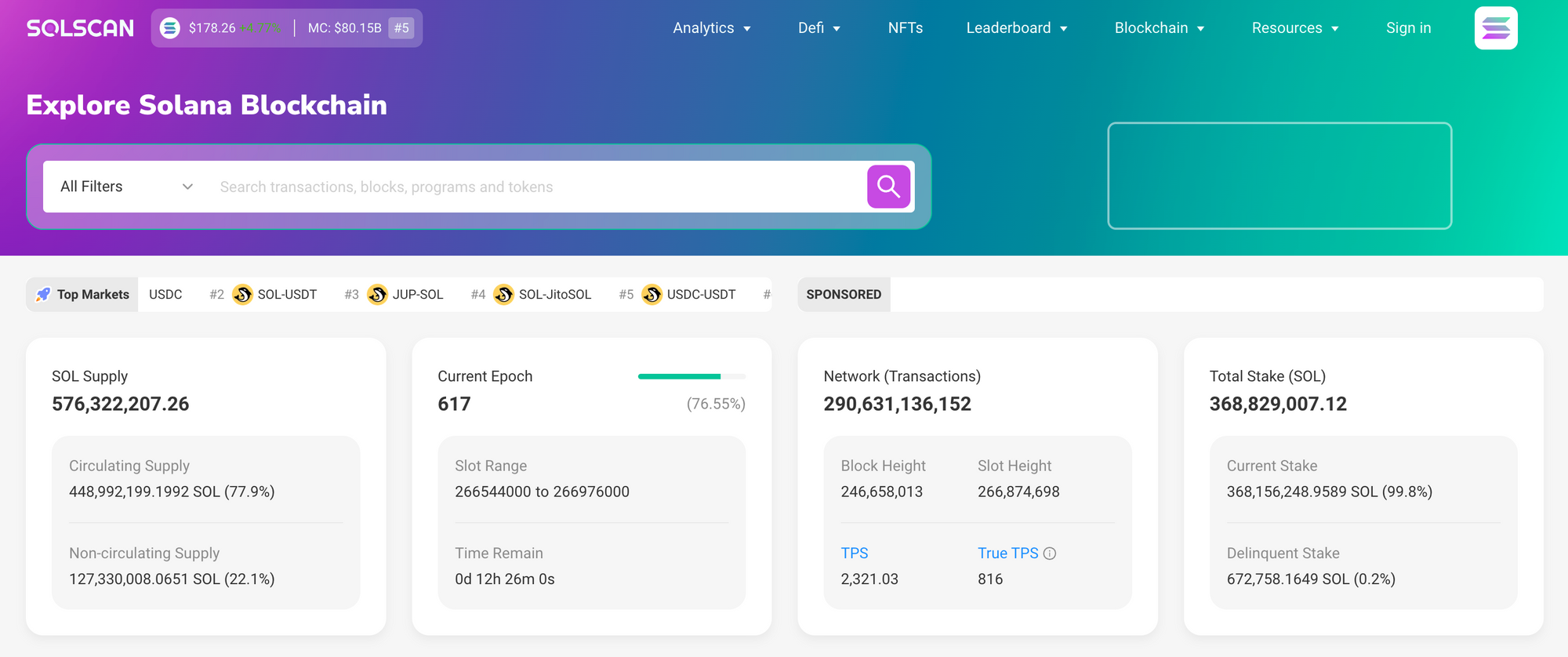
One handy resource I’ve used is an official explorer site for Solscan; you can find it naturally embedded here. That tool gives quick transaction lookup and a solid NFT tracker, but like any single tool, it’s not the whole story. On one hand it’s fast and feature-rich; on the other hand you still want to combine it with market tools and project-level research.
There’s also the question of wallet analysis. Long-form hodlers want to identify whales and long tails, while flippers want to spot recent buyers. Initially I used explorers as passive lookups, though actually I converted them into active alerts. Pro tip: set alerts for transfers from known marketplaces and for sudden swaps in liquidity pools—these often precede big price moves.
Another point—data lineage. Where does the explorer source its metadata? Some rely on marketplace APIs (which can be flaky). Some ingest RPC events directly. The better ones do both and reconcile discrepancies. This matters because if you’re tracking royalties and ownership history for NFTs, you want a clear provenance trail that doesn’t vanish when a marketplace changes their schema.
Token tracker features that actually help
Short list. Wow! Real-time price, holder concentration, largest transfers, mint history, and verified contract links. Beyond that, I look for token age, distribution charts, and vesting schedules annotated on the timeline. Longer-term investors care about supply unlocks—those are the hidden catalysts that get ignored until they hit.
Charts are seductive. But graphs without annotated events are just pretty pictures. Hmm… a sudden spike in volume could be a legit pump, or an on-chain wash trade from market makers. On one hand charts tell you what happened; on the other hand, you need labels to explain why. Good token trackers provide event markers—airdrops, token burns, or notable whale moves—so the visual story actually means something.
For devs, exportability is key. CSV exports, websocket updates, and a stable API let you backtest strategies or feed a bot. I built an internal tool once that cross-referenced transfer patterns with mint contracts, and it caught weird address reuse that signaled automated bots. That was a small “aha!” moment—somethin’ you can’t spot on a static dashboard.
FAQ
Which explorer is best for NFT tracking?
It depends on your needs. If you want fast collection-level floor tracking and wallet provenance, use an explorer that updates trades in near real-time and shows per-wallet history. If you need deep forensic detail, prefer tools that expose raw transaction lists and token program interactions. I’m not 100% sure any single explorer is perfect, so cross-check when the stakes are high.
How do I avoid bad data when tracking tokens?
Look for explorers that reconcile marketplace data with on-chain events, provide clear metadata sources, and expose API access so you can validate records yourself. Also, be wary of new tokens with low liquidity—volume can be manipulated. A mix of automated alerts and manual vetting usually works best.
To wrap the arc a bit—I’m excited about the present state of Solana analytics, though skeptical about shiny dashboards that hide the raw facts. Something felt off when explorers prioritized aesthetics over auditability. On the flip side, the best tools now let you pivot quickly: from a macro market sweep to a single-wallet forensic lookup in seconds. That shift changes how we trade and research.
So here’s my closing note—well, more of a nudge. If you’re serious about tracking NFTs or tokens on Solana, choose tools that give you raw data access and event context. Don’t rely on floor prices alone. And try not to get lulled by smooth UIs—dig into the transfers. I’m biased, but that practical curiosity saves headaches later. Alright, that’s enough for now… I gotta check a few mempool-like patterns that popped up this morning.